A hydraulic salon chair pump carries heavy clients through countless height adjustments each day. Its smooth movement depends on clean oil, firm seals, and careful handling. When the pedal feels soft, the chair drops slowly, or the base makes unusual noises, maintenance should not wait. Small warning signs often appear before costly pump failure.
How to maintain the pump of a hydraulic salon chair? Start with the manufacturer’s service instructions and inspect the pump during a quiet opening or closing routine. Wipe dust and hair from the pedal, cylinder, and base. Check for oil marks beneath the chair, loose fittings, damaged hoses, or uneven lifting. Never force a stiff pedal. That quick action may hide a worn seal or trapped air.
This 2026 guide combines practical salon experience with maintenance principles used by equipment technicians. It explains safe cleaning, leak inspection, lubrication limits, pressure checks, and replacement decisions. A clean cloth, flashlight, gloves, and a simple maintenance log can reveal patterns over time. Record the chair’s symptoms, dates, and repairs.
Perfect maintenance is unrealistic. Busy salons miss details. That happens. However, repeated neglect turns minor wear into downtime, customer discomfort, and avoidable repair costs. Follow the pump maker’s specifications, use compatible products, and stop service when the chair becomes unstable. Qualified technicians should handle internal hydraulic repairs. This approach protects staff, clients, and the chair’s working life.
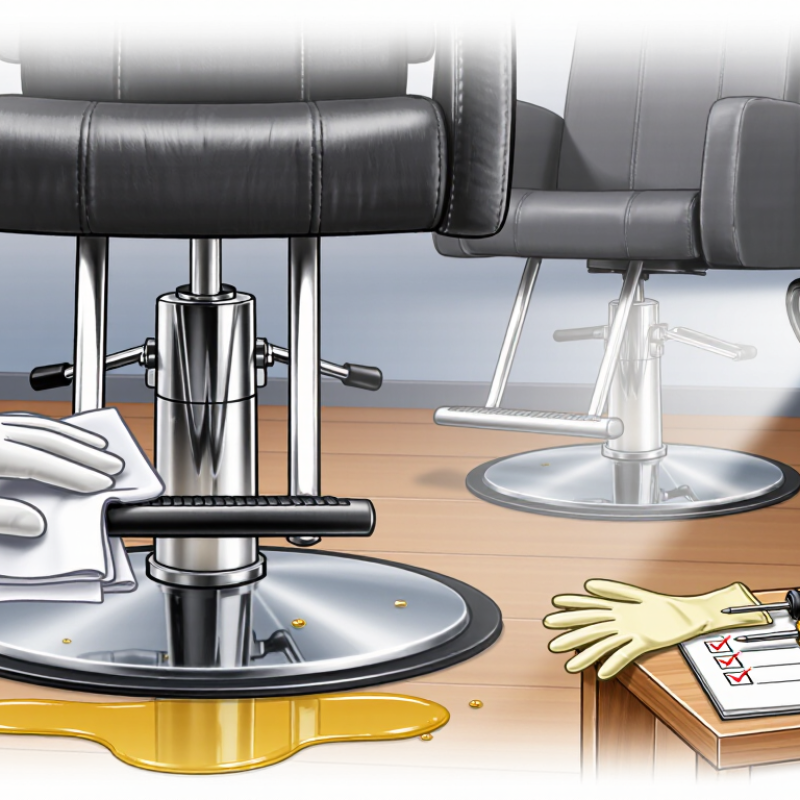
Map the Hydraulic Pump, Foot Pedal, Valve, and Base Assembly
A hydraulic salon chair pump works as a connected system, not a single part.
The pump lifts the chair, while the foot pedal controls oil flow through the valve. The valve directs pressure. The base assembly carries the load and keeps movement stable. Map these parts before servicing. Photograph the pedal linkage, valve position, hose routing, and mounting bolts. Small details matter.
ISO 4413 recommends controlling stored hydraulic energy before inspection.
Lower the chair fully, remove unnecessary weight, and release pressure through the correct control. Never place fingers beneath the seat. The U.S. Bureau of Labor Statistics reported about 2.6 million private-industry nonfatal injuries and illnesses in 2023. Careless maintenance can add avoidable exposure. A clean cloth helps locate fresh oil around seals, fittings, and the pump shaft. Wipe first. Check again after several lifts.
Listen for uneven clicks from the pedal.
Watch for slow rising, sudden sinking, or side-to-side movement. These symptoms may involve the valve, not only the pump. Inspect the base for cracked welds, loose casters, or distorted mounting points. Tighten fasteners to the manufacturer’s specified torque when available. Do not guess with excessive force. It can deform the base. In practical workshops, rushed diagnosis remains a common weakness. I have also seen clean-looking pumps hide worn pedal pivots. Recheck after use.
Select ISO VG 32, 46, or 68 Fluid Only as Manufacturer-Specified
2026 Top Tips to Maintain a Hydraulic Salon Chair Pump?
Select ISO VG 32, 46, or 68 Fluid Only as Manufacturer-Specified
A salon chair pump depends on correct oil viscosity for smooth lifting and controlled lowering. ISO 3448 defines ISO VG 32, 46, and 68 as nominal viscosities of 32, 46, and 68 mm²/s at 40°C. These are not interchangeable by habit. A chair designed for VG 32 may lift slowly with VG 68, especially in a cool room. Thicker fluid can also increase seal stress and pump resistance. Check the service label or technical manual before adding fluid. Guessing is costly.
Maintenance tip: Keep the reservoir clean and tightly closed. Use a dedicated, lint-free funnel. Never mix unknown hydraulic fluids, engine oil, or automatic-transmission fluid. A small contamination event can damage valves and seals. ISO 4406:2021 measures hydraulic cleanliness through particle-count codes, showing why visible dirt is already a warning. Wipe the pump area before opening the filler port.
Inspect leaks around the piston rod, hose fittings, and release valve each month. A damp ring is not normal maintenance. It is evidence. I have seen minor seepage become a chair that drops unexpectedly during service. That observation deserves caution, not panic. Record the fluid grade, fill date, and chair behavior. If the manufacturer permits alternatives, confirm the operating temperature and seal compatibility first. Fluid replacement intervals vary, so a fixed calendar rule can be misleading.
Apply ISO 4406 Cleanliness Practices When Handling Hydraulic Oil
Maintaining a hydraulic salon chair pump starts with the oil entering its small, pressure-sensitive system. Clean fluid protects valves, seals, and the smooth lifting action clients notice immediately. ISO 4406 provides a measurable cleanliness language. Its code records particle levels at four, six, and fourteen micrometers per milliliter. Check the pump or service manual for the acceptable target before adding oil. Do not guess.
Use a sealed, clearly labeled container for every oil transfer. Wipe the container opening before removing its cap. Keep funnels, hoses, and tools dedicated to hydraulic maintenance. A clean-looking funnel may still carry abrasive dust. Filter new oil through equipment suited to the required cleanliness level. Pour slowly, because splashing can introduce air and contamination. Never leave the reservoir open beside hair, towels, or chemical sprays.
Take samples from active, well-mixed oil rather than from the reservoir bottom. Follow a consistent sampling method, then record the date, oil condition, and ISO 4406 result. Compare readings over time. A rising particle count can reveal seal wear, dirty storage, or poor handling before the chair becomes noisy. Service staff sometimes replace oil too quickly without checking contamination sources. That wastes fluid and hides the real fault. I would also question any unusually clean result if the sampling bottle or procedure was not controlled. Small oversights matter.
Inspect Seals, Hoses, and Fasteners Under ISO 4413 Safety Principles
2026 Top Tips to Maintain a Hydraulic Salon Chair Pump
Before touching a hydraulic salon chair pump, lower the chair fully and isolate its energy source. Release stored pressure according to the service instructions. ISO 4413 safety principles emphasize controlled energy, clean working conditions, and risk reduction. Wear eye protection, and never check a suspected leak with your fingers. Small leaks matter. Use cardboard instead.
Inspect seals around the pump shaft, cylinder, and fittings. Look for wet oil rings, cracked rubber, or dust stuck to the surface. A clean seal can still be hardened, so gently check its condition during scheduled maintenance. Replace damaged seals with compatible parts, not improvised materials. I once found a chair working normally despite a slow leak under its base. That assumption was costly.
Examine hoses for bulges, flattened sections, abrasion, and sharp bends. Keep them away from moving frames and hot surfaces. Check every fastener, including cylinder mounts, pivot bolts, and fitting nuts. Tighten them to the manufacturer’s specified torque, because excessive force can damage threads or seals. Never guess when the torque value is available. After maintenance, test the chair without a client seated, watching for drift, unusual noise, or sudden movement. Record the inspection date and any replaced parts. ISO 4413 offers sound guidance, but local procedures and competent technical advice still matter.
2026 Top Tips to Maintain a Hydraulic Salon Chair Pump
Preventive inspection schedule based on routine hydraulic-equipment safety practice. ISO 4413 provides safety principles, but it does not prescribe fixed maintenance intervals; always verify the chair manufacturer’s instructions.
Key focus: inspect seals for leakage, hoses for cracking or abrasion, and fasteners for looseness. Isolate hydraulic pressure before servicing and replace damaged parts immediately.
Test Lifting, Lowering, and Rated Load Within Manufacturer Limits
2026 Top Tips to Maintain a Hydraulic Salon Chair Pump
A hydraulic salon chair should lift smoothly, lower steadily, and remain stable under its rated load. Test these movements before opening each day. Listen for grinding, sudden drops, or uneven resistance. These signs may indicate trapped air, worn seals, or insufficient hydraulic fluid. Check the manufacturer’s manual before adding fluid or adjusting any valve.
Tips: Place the chair on a level floor. Test lifting with no occupant first. Then use a controlled load within the rated limit. Avoid bouncing, leaning heavily, or exceeding the stated capacity. Wipe the pump area after cleaning, because chemical residue can damage seals over time. Keep fingers away from moving joints.
In regular servicing, I have found that small leaks often appear beneath the base before performance changes. Use a clean cloth to check for fresh oil around fittings and the cylinder. Never force a stiff foot pedal. That can turn a minor fault into a costly repair. I once overlooked a slow lowering problem because the chair still looked functional. It was not a good judgment. Test both directions fully, record unusual movement, and arrange qualified maintenance when the pump fails to hold height or shows visible damage.
FAQS
Use only the viscosity specified by the manufacturer. Common grades include ISO VG 32, 46, and 68. They are not automatically interchangeable. Thicker fluid may slow lifting in a cool room.
Unknown fluids can damage seals, valves, or pump performance. Do not add engine oil or transmission fluid. Check compatibility before using an approved alternative. Guessing is expensive.
Keep the reservoir closed whenever possible. Use a clean, dedicated, lint-free funnel. Wipe the filler area first. Keep oil away from hair, towels, and chemical sprays. Small particles matter.
ISO 4406 records particle levels at several microscopic sizes. Check the required cleanliness target in the service manual. A rising particle count may indicate seal wear or dirty storage. Visible dirt is already a warning.
Take samples from active, well-mixed oil. Do not sample only from the reservoir bottom. Use a controlled bottle and consistent method. Record the date, oil condition, and cleanliness result. A very clean result can still mislead.
Inspect the piston rod, hose fittings, and release valve monthly. Look for wet rings, oil drops, or dust stuck to oil. A damp ring is evidence, not normal maintenance. Minor seepage can become sudden chair movement.
Lower the chair completely before touching the pump. Isolate its energy source and release stored pressure as instructed. Wear eye protection. Never test a leak with your fingers. Use cardboard instead.
Inspect seals for cracks, hardening, and oil around the shaft. Check hoses for bulges, abrasion, flattening, and sharp bends. Keep hoses away from moving frames and hot surfaces. Tighten fasteners to the specified torque. More force is not better.
Conclusion
Maintaining a hydraulic salon chair pump requires a clear understanding of how the pump, foot pedal, control valve, and base assembly work together. How to maintain the pump of a hydraulic salon chair? Start by checking the manufacturer’s instructions and using only the recommended hydraulic fluid, such as ISO VG 32, 46, or 68. Keep the oil clean by using sealed containers, clean tools, and careful filling practices that support ISO 4406 cleanliness principles.
Regularly inspect the pump for leaks, worn seals, damaged hoses, loose fasteners, or unusual sounds, following safe practices based on ISO 4413 principles. Operate the foot pedal smoothly and test both lifting and lowering functions without exceeding the chair’s rated load or movement limits. If performance becomes uneven, the chair sinks, or resistance increases, stop using it and arrange qualified service. Routine cleaning, inspection, and controlled testing can extend pump life, improve user safety, and help maintain stable chair performance.

 Sincera Furniture