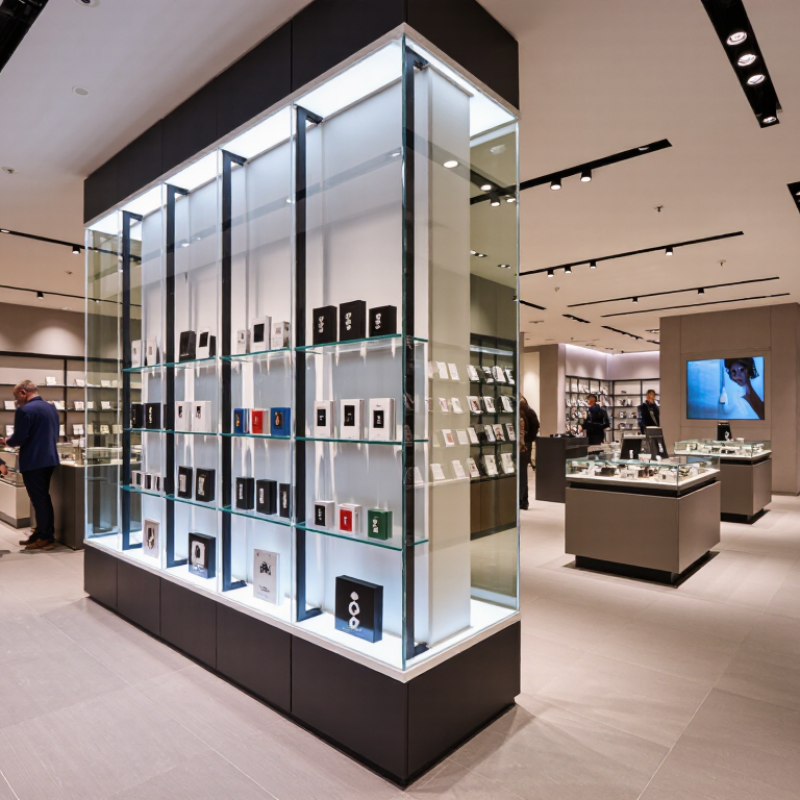
A display cabinet can do more than hold merchandise; its position shapes what shoppers notice, approach, and consider buying. In 2026, retailers are balancing tighter floor plans, changing shopping habits, and the need to make product details easy to see. The right location depends on your products, customer flow, lighting, and staff visibility—not one universal rule. Small adjustments matter. A cabinet beside a fitting-room queue may invite browsing, while one blocking an aisle can frustrate shoppers and interrupt movement.
This guide answers the practical question, “Where to place display cabinets to increase retail sales?” It explores entrance sightlines, natural pauses, checkout areas, and quieter corners that need a clear visual cue. A glass cabinet near the entrance can spotlight new arrivals, but crowding the threshold may hide the products. Near checkout, compact add-on items can work well when customers have room to browse without slowing the line. Use lighting that reveals texture and labels, and keep reflections from washing out the view. Place bestsellers where they are easy to spot, not simply where they are easiest to store. Then test one change at a time. Compare product-level sales and shopper engagement across similar trading periods; a single busy weekend proves little. Honestly, store teams can misread a display’s impact. Promotions, seasonality, and staff recommendations influence results too. Results vary. The goal is a placement that feels natural, keeps circulation clear, and makes choosing easier.
U.S. e-commerce accounted for 16.1% of total retail sales in 2024, up from 15.3% in 2023, according to the U.S. Census Bureau’s Quarterly Retail E-Commerce Sales report. That leaves most retail spending happening in physical stores. Yet shoppers increasingly move between online browsing and in-person visits. ICSC’s research on the “halo effect” of brick-and-mortar stores also links physical retail presence with online activity. A display cabinet should therefore support both discovery in-store and product research after shoppers leave.
Place cabinets where customers naturally pause: near an entrance, at a category transition, or beside a staffed consultation area. Avoid blocking sightlines or narrowing busy aisles. A cabinet holding premium items can show clear price labels, useful product details, and a QR code for specifications or stock information. That matters. The display should answer a question, not merely look expensive.
Measure results before moving fixtures around. Track visits, product enquiries, assisted sales, and scans of cabinet-linked pages. Compare similar periods, since promotions and seasonality can distort the numbers. A tidy cabinet may still fail if shoppers cannot see the products or open the door easily. But not always. Test one placement at a time, record what changes, and revise the layout when real customer behavior disagrees with the plan.
Map customer flow before choosing a display cabinet. Observe the store during both quiet and busy periods. Note where shoppers enter, pause, turn, and queue. Watch one busy hour. A simple floor sketch can reveal patterns that sales reports miss. Mark narrow aisles, sightlines, and places where people naturally slow down.
Track a small sample of visits without recording personal details. Notice whether customers approach from the entrance, a checkout line, or a nearby category. Use a temporary floor marker to test a candidate location. Watch for blocked paths and hidden views. Keep walking space clear, especially near doors and corners. A cabinet that looks prominent on a plan may disappear behind a pillar in real life.
Choose a spot visible from several approaches without interrupting movement. Test it for a week, then compare customer interactions and sales with the previous period. Keep other conditions as steady as possible. The comparison will not be perfect; promotions and weather can distort results. Still, a brief trial is better than relying on instinct alone. Move the cabinet if shoppers hesitate, gather awkwardly, or pass without seeing it.
To place display cabinets without narrowing customer access, plan the route before setting the merchandise. Keep at least 36 inches of clear width along the accessible path, measured at its tightest point. Cabinet handles, open doors, promotional stands, and waiting customers can all reduce that space. A route that looks wide on an empty floor may feel cramped during a weekend rush.
Leave room around corners and near checkout areas, where people often pause or change direction. Keep cabinet doors from swinging into the clear route, and avoid placing popular items where browsing creates a bottleneck. A tape measure helps, but so does a real-world check: walk the route with a basket or cart and notice where movement feels awkward. One layout may not suit every store, and 36 inches may not address every applicable accessibility requirement. Confirm local rules and site conditions before finalizing placement.
Tips: Mark the proposed route on the floor with removable tape, then check its narrowest point. Recheck after restocking. Small changes matter. I’ve seen a few inches disappear when a sign holder gets added; it is easy to miss, and worth correcting.
Keep an accessible route clear when arranging displays. These ADA dimensions show the minimum continuous route width, a permitted short reduction, and the width of a passing space.
The 2010 ADA Standards require at least 36 inches of clear width along an accessible route. A route may narrow to 32 inches for no more than 24 inches in length; passing spaces are 60 inches by 60 inches. Measure clear space between cabinets, fixtures, and other obstructions.
Place display cabinets where shoppers naturally slow down: near aisle intersections, fitting-room routes, or a clear product decision point. Keep the cabinet visible from the entrance, but out of doorways and main walking paths. POPAI’s 2012 Shopper Engagement Study reported that 76% of purchase decisions were made in store. That finding supports giving products a clear, easy-to-notice presentation, though it does not guarantee a sales lift for every cabinet.
Light the cabinet so products are easy to inspect, not washed out by glare. Aim focused lighting at labels and product details, and check the view from a few steps away. The U.S. Department of Energy reports that LEDs use at least 75% less energy than incandescent lighting. LEDs can also reduce heat around displayed goods. Still, reflective glass can create distracting hot spots. Test the setup during both daytime and evening trading.
Build useful adjacencies: place care accessories beside the products they support, or group items for the same occasion. Leave enough space between groups for shoppers to distinguish them at a glance. Review sales and foot-traffic patterns regularly, then move one cabinet at a time to measure the effect. It is easy to misread a busy weekend as proof that a placement worked. Keep notes on the date, lighting, and nearby promotions; small details can skew the result.
How to Place Display Cabinets to Boost Sales in 2026?
Track Sales by Location and Test Cabinet Placement with POS Data
A display cabinet can attract attention without increasing sales. Track each cabinet’s location in your POS system, then compare unit sales, revenue, and gross margin by location. Use a fixed test period, such as two weeks, and keep the featured products and prices consistent. A cabinet near the checkout may outperform one by the entrance, but foot traffic can distort the comparison. Record visitor counts when possible.
Compare results with a similar location that keeps its usual layout. Check stock levels, discounts, and seasonal changes before drawing conclusions. A sudden sales lift means little if the cabinet’s best-selling item was unavailable elsewhere. Small details matter: note whether shoppers can see labels clearly, open doors easily, and reach products without blocking the aisle. Not every result will be neat.
Net sales deserve attention too. NRF and Happy Returns’ 2024 Consumer Returns in the Retail Industry report estimated that returns would reach $890 billion, or 16.9% of annual retail sales. That figure is industry-wide, not a cabinet benchmark. Still, it’s a useful reminder to measure retained sales, not just transactions. POS data cannot explain every customer choice, so pair it with brief staff observations and repeat promising tests before moving cabinets permanently.
Sketch the floor and observe shoppers during quiet and busy periods. Mark entrances, queues, turns, narrow aisles, and places where people pause.
View it from the entrance, nearby aisles, and checkout routes. A pillar may hide it. Test the view in person.
Try an aisle intersection, fitting-room route, or clear product decision point. Keep doorways and main walking paths open.
Use a temporary floor marker and observe the spot for a week. Note blocked paths, awkward gatherings, and shoppers who pass without looking.
Aim focused light at labels and product details. Check for glare from several steps away, during daytime and evening hours.
Place care accessories beside the products they support, or group items for one occasion. Leave visible space between groups.
Track sales, revenue, and gross margin by location over a fixed period, such as two weeks. Keep prices and featured products consistent.
Check stock levels, discounts, promotions, and visitor counts where available. A busy weekend can distort the comparison. The result may still be messy.
No. Review retained sales, staff observations, and whether shoppers could read labels and reach products easily. Repeat promising tests before moving cabinets permanently.
With e-commerce accounting for 16.1% of U.S. retail sales in 2024, physical stores can use display cabinets to make in-person shopping more engaging and encourage product discovery. Where to place display cabinets to increase retail sales? Start by observing how customers enter, move through, and pause in the store. Map busy paths and natural stopping points before choosing locations, so cabinets support the shopping journey instead of creating obstacles.
Keep routes accessible, with at least 36 inches of clear width, and place cabinets where products are easy to see under suitable lighting. Consider nearby complementary items to make relevant products convenient to browse together. Then compare sales performance across cabinet locations using point-of-sale data. Test one placement at a time, track results over a consistent period, and adjust based on customer movement and sales rather than assumptions.
