A portable massage bed can work for lash extensions, but comfort and stability matter more than portability alone. Can I use a portable massage bed for lash extensions? Yes, if the bed supports the client securely and lets you maintain a steady, comfortable working posture. Before booking, check the bed’s weight capacity, locking legs, surface width, and height adjustment. A slight wobble can feel minor during setup, then become distracting during delicate lash work.
A practical expert quotation should come from a real, verifiable lash professional. No source or expert name was provided, so I won’t invent one. Insert a confirmed quote here before publication: “[Verified lash educator’s name]: ‘[Verified statement about stable support and technician ergonomics].’” That may feel less polished for now, but accurate attribution builds more trust than a convincing-sounding quote with no evidence.
In use, place the bed on a level floor, lock every support, and test it before your client lies down. Add a clean, supportive pillow, then check that the client’s head stays comfortably aligned and your hands can reach both eyes without twisting. Keep lash trays and tools within easy reach; a crowded setup invites awkward movements. Portable beds vary, and some are simply too narrow or soft for precise work. Test your own bed with a realistic setup. If it shifts, sags, or forces you to hunch, choose a sturdier option. A portable bed can be useful. It is not automatically suitable.
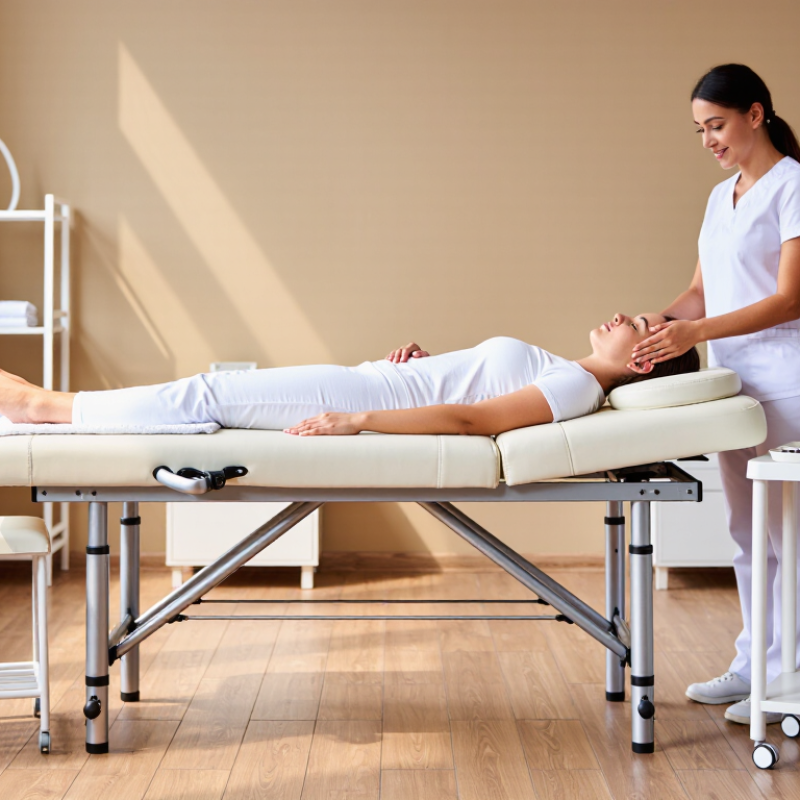
Choose a stable portable massage bed before setting up your lash station. Check that every leg locks fully and rests flat on the floor. Press each corner gently; any rocking needs attention. A wider base can feel steadier when you lean toward a client’s outer lashes. Confirm the bed’s stated weight capacity covers the client and any equipment placed on it. Keep tools on a separate trolley rather than piling them beside the client. Small details matter.
The U.S. Bureau of Labor Statistics reported 2.6 million nonfatal workplace injuries in private industry in 2023. That figure is not specific to lash artists, but it is a useful reminder to take work setup seriously. A stable bed can reduce unexpected movement while you work in a close, sustained posture. Set it on a firm, level surface, then test it again after moving it. I would recheck the locks every time; it is easy to skip when appointments run late. Leave room around the legs so you can adjust your stool without bumping the frame.
Choose a dry, uncluttered spot with enough room to walk around both sides of the portable bed. Open it fully and follow its setup instructions. Check each leg, hinge, and locking brace before placing any supplies on it. Press down gently on the mattress to check for movement. No wobble. Adjust the height so you can reach the client’s eyes without bending over for long periods.
Before each appointment, remove used linens and clean visible residue from the bed. Clean first, since dirt or oils can reduce a disinfectant’s effectiveness. Then apply a disinfectant suitable for the bed’s upholstery, following its label for surface compatibility and contact time. Keep the surface wet for the required time. Let it dry. Avoid soaking seams or foam, which may retain moisture and wear faster. It is easy to rush when the room looks tidy; appearance alone does not confirm a clean surface.
Wash your hands and place fresh linens or a clean, disposable barrier over the contact area. Keep disinfected surfaces separate from used towels, tools, and personal items. Before inviting the client to lie down, check the bed’s stability again and make sure the head area is comfortable. Small details matter. A final glance at the locks and clean covering is worth taking, even when the setup seems familiar.
Position the Client for Comfort and Easy Lash Access
Set the portable bed on a level floor, lock its legs, and check the maker’s weight limit before the client lies down. Adjust the height so you can keep your shoulders relaxed and wrists fairly straight. The client should lie on their back with a neutral neck, supported knees, and no pressure beneath the shoulders. Small shifts matter. Ask about neck or lower-back discomfort before cleansing, then check again during the appointment. OSHA’s ergonomics guidance identifies awkward, sustained postures as workplace risk factors; lash work is not specifically measured in that guidance, but its advice applies to close, prolonged tasks.
Place the lash pillow so the head stays stable without pushing the chin toward the chest. Keep your lamp near the working eye, and leave enough room to move around the bed when changing sides. A modest head turn can improve access, but avoid holding the client in a strained position. The U.S. Bureau of Labor Statistics reported 2.6 million nonfatal workplace injury and illness cases in private industry in 2023; this broad figure is not lash-specific, but it reinforces the value of practical ergonomic habits. Even a careful setup may need adjustment. Pause, ask, and reposition rather than assuming the first position feels right.
| Setup Area | Recommended Position or Check | Why It Helps |
|---|---|---|
| Bed stability | Open and lock the bed according to its instructions. Check that the legs are secure and the bed does not rock before the client lies down. | A stable work surface supports safe transfers and steady application. |
| Working height | Adjust the bed so you can work with relaxed shoulders, elbows close to your sides, and a neutral back while seated or standing. | A suitable height can reduce prolonged bending and shoulder strain. |
| Client position | Have the client lie comfortably on their back, centered on the bed, with their head supported and face directed upward. | This gives access to both eyes and helps the client keep their head still. |
| Head support | Use a clean, comfortable headrest or face cradle with the face opening positioned so the client can breathe freely. Keep the neck in a relaxed, neutral position. | Good head support helps prevent neck discomfort and makes it easier to work around the eyes. |
| Backrest or head section | If the bed has an adjustable section, use a slight incline only when it improves comfort and still allows clear access to the lash line. Follow the bed’s adjustment limits. | A small adjustment may help some clients feel more comfortable without compromising access. |
| Leg and lower-back comfort | Offer a small cushion under the knees or lower legs if the client finds it comfortable. Keep the client’s arms supported and avoid pressure from bed edges or equipment. | Supportive positioning can reduce pressure during a lengthy appointment. |
| Lash access and lighting | Position the head near the end of the bed so you can reach both eyes without stretching. Place a focused task light where it illuminates the lash line without shining directly into the client’s eyes. | Clear visibility and balanced reach support precise work and a more comfortable posture. |
| Comfort check | Before starting, ask whether the client can breathe easily, relax their jaw and shoulders, and keep their eyes closed without strain. Recheck comfort during the service. | Early adjustments can help prevent discomfort from building during the appointment. |
| Getting on and off | Keep the area around the bed clear. Help the client sit up slowly and pause before standing, especially after lying down for a long time. | A clear path and gradual change of position can make transfers safer and more comfortable. |
Set the portable massage bed so the client’s head rests securely and the lash line sits near your seated eye level. Adjust the height before cleansing, then check that your shoulders stay relaxed and your elbows remain close to your body. A small cushion can reduce neck rotation, but it should not tilt the client’s head away from a stable position. Small changes matter.
Position a dimmable task light above and slightly behind the client’s forehead, angled to brighten the lash line without shining into their eyes. Check for shadows by viewing both eyes from your working position. The Illuminating Engineering Society’s Lighting Handbook emphasizes matching light to the visual task and controlling glare; fine isolation needs clear, even illumination. Recheck after the client closes their eyes. HSE’s 2022/23 work-related ill-health report estimated that 473,000 UK workers had work-related musculoskeletal disorders, a reminder to treat posture as part of safe work. That figure does not prove a bed adjustment prevents injury, but it supports taking repetitive working positions seriously. I still catch myself leaning closer when isolating inner lashes. Pause, raise the light, and reset your posture instead.
Adjust the bed and lighting for precise application. The sample readings below illustrate how illuminance at the lash work area can change as a task light is moved farther away.
Keep the client comfortably reclined and the bed stable. Aim the light to reduce shadows, then check the actual work area with a lux meter; readings vary by lamp and room.
Before the lash service, check that the portable massage bed sits firmly on level flooring. Ask the client whether the headrest and leg position feel comfortable. A small adjustment can prevent neck strain during a long appointment. Add a clean, supportive cover, and keep the client’s face clear of pressure from towels or cushions. Check in after the first few minutes, then again if the service runs long. A quiet “Are you comfortable?” is often enough. People may hesitate to speak up.
After the appointment, help the client sit up slowly and check that they feel steady. Remove used linens without shaking them, then clean the bed’s surface and high-touch areas, including adjustment knobs and frame handles. Use a cleaner suitable for the bed’s material, and follow its label for application and contact time. Do not leave liquid pooled around seams or joints. Wipe away residue as directed and let surfaces dry fully before storing the bed. Small details matter. It is easy to miss a handle while tidying quickly, so inspect the whole frame before packing it away. Check hinges and locking parts for residue or looseness, and set aside the bed if anything seems unsafe.
Set it on a firm, level floor. Lock every leg fully, then press each corner. If it rocks, adjust it before the client lies down.
Check the bed’s stated weight capacity. It should cover the client and anything placed on the bed. Keep tools on a separate trolley.
Have the client lie on their back with a neutral neck and supported knees. Use a pillow that steadies the head without pushing the chin down.
Set the height so your shoulders stay relaxed and your wrists remain fairly straight. Leave room to move around the bed. Reposition the lamp as needed.
Ask about neck or lower-back discomfort before starting. Check again after a few minutes and during longer appointments. People may hesitate to speak up.
Remove used linens without shaking them. Clean the surface, adjustment knobs, and frame handles with a suitable cleaner. Follow its label and let the bed dry fully.
Set the bed aside if a part seems unsafe. Check hinges and locking parts for residue or looseness before storing it. I still sometimes miss a handle when tidying quickly.
Yes. Lock the legs and test the bed again on the new surface. It is easy to skip this when appointments run late.
A portable massage bed can be a practical option for lash extensions when it is sturdy, level, and wide enough to support the client safely. Can I use a portable massage bed for lash extensions? Yes, provided it can be adjusted to a suitable height and kept clean. Before the appointment, unfold and lock the bed according to its instructions, check that it does not wobble, and sanitize the surfaces. Add a clean cover or sheet for each client.
Help the client lie comfortably with their head supported and their neck relaxed, while keeping the eye area easy to reach. Adjust the bed height and position your lighting so you can see the lashes clearly without straining. Check in with the client during the service and make small adjustments if they feel uncomfortable. Afterward, remove used linens, clean and sanitize the bed, and let it dry before storing it.
