Why Buy a Pipe Less Pedicure Chair for Your Salon? The better question is, “Why should I buy a pipe-less pedicure chair?” The answer begins beneath the basin. Traditional pipe-connected systems can hide residue inside narrow plumbing lines, where cleaning becomes difficult and time-consuming. A pipe-less chair uses a removable tub or disposable liner, helping technicians inspect and clean the water-contact area more directly.
Nail-industry educator Janet McCormick has emphasized the importance of practical sanitation routines, noting, “A clean-looking pedicure area is not enough; every water-contact surface needs disciplined attention.” Her point matters during busy appointments. A technician can remove the basin, sanitize it, and prepare a fresh setup without relying on complicated internal pipes. That process may support better consistency, especially when several clients arrive in succession.
Pipe-less designs can also simplify maintenance. There may be fewer hidden components, fewer plumbing connections, and less risk of expensive internal buildup. Clients may notice the visible details: a clean liner, dry tubing, and a fresh towel beside the chair. Small signals build trust.
Still, this chair is not a magic solution. Poor cleaning habits can defeat any design. Some models also require careful liner disposal, proper ventilation, and staff training. I would inspect the chair’s basin size, pump access, warranty, and replacement-part availability before purchasing.
For salons seeking easier daily routines and clearer sanitation control, a pipe-less pedicure chair offers a practical investment. It does not replace professional judgment. It makes that judgment easier to apply.
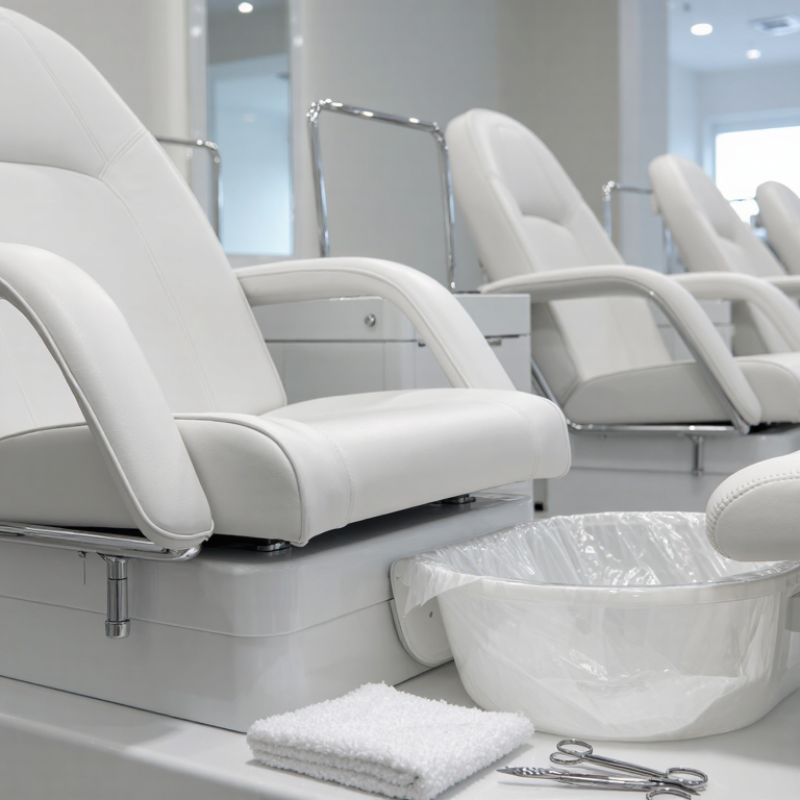
A pipe-less pedicure chair uses a removable water jet instead of hidden plumbing lines. The jet circulates water inside the basin during a pedicure. After service, staff can remove the unit and clean the basin more directly. This design reduces areas where hair, skin debris, and residue may collect unseen. It also makes routine inspection easier.
The chair still needs disciplined cleaning. Staff should drain the basin completely, remove visible debris, and disinfect every contact surface according to the manufacturer’s instructions. Fresh liners may add another hygiene layer, but they do not replace proper cleaning. The drain area deserves attention, too. It is often overlooked.
Less hidden plumbing can simplify maintenance and reduce concerns about trapped water. A technician can usually access the jet, basin, and drain components without opening a complex pipe system. That may support smoother appointments and fewer maintenance interruptions. However, the chair is not a magic hygiene button. Poor cleaning can still create problems. Salon owners should check the jet’s construction, drainage speed, seat comfort, and replacement-part availability before buying. A practical trial helps. A beautiful chair that drains slowly may frustrate both staff and clients.
A pipe-less pedicure chair uses a self-contained basin rather than permanent water and drainage connections. This can simplify installation, support flexible salon layouts, and reduce dependence on fixed plumbing.
Why Buy a Pipe Less Pedicure Chair for Your Salon?
A pipe-less pedicure chair does not mean a waterless service. It means the water system avoids hidden plumbing inside the chair. Fresh water enters a removable basin, while a compact pump creates circulation for soaking and massage. After the service, the basin drains through an accessible outlet or hose. The exact setup varies by model, so technicians should read the operating manual carefully.
This design makes daily cleaning more visible and manageable. Staff can remove the basin, inspect the pump area, and reach surfaces that built-in pipes may conceal. Some systems also use removable jet components or disposable liners. These parts still require correct handling. A liner is not a replacement for cleaning.
From hands-on salon maintenance, the biggest advantage is easier inspection. If water drains slowly, staff can identify the problem sooner. There is less guessing behind a cabinet wall. That saves time during busy appointment periods. It may also reduce odor caused by neglected internal plumbing.
However, pipe-less does not automatically mean safer. Staff must empty standing water after every client and follow approved sanitation procedures. Disinfectant contact time matters. Skipping it is a real weakness. Operators should also check seals, pumps, drains, and electrical connections regularly. A clean basin can still hide contamination in a neglected accessory. Choosing a chair with accessible parts, clear drainage, and practical service instructions supports more consistent hygiene and smoother salon work.
| Evaluation Dimension | Pipe-Less Water System | Traditional Piped System | Salon Benefit |
|---|---|---|---|
| Water pathway | Water circulates through a removable or disposable liner and a removable jet assembly rather than fixed internal pipes. | Water is circulated through built-in plumbing, pump channels, and internal hoses. | Fewer hidden water-contact surfaces can make cleaning and inspection more straightforward. |
| Typical operating sequence | Install the liner and jet, fill the basin, operate the massage function, drain the water, then remove and discard or disinfect the required components. | Fill the basin, operate the circulation system, drain the water, and clean and disinfect the basin, jet, pump, and internal water-contact areas. | Creates a clear, repeatable turnover routine between clients. |
| Water-contact components | Usually includes the basin liner, jet, jet screen, and drain area. Exact components vary by chair design. | Includes the basin, jet, screen, pump, hoses, and other internal plumbing surfaces. | The removable parts can be visually checked and cleaned more easily than inaccessible plumbing. |
| Cross-contamination control | A new single-use liner and jet may be used for each client, where permitted and required by local rules. | The same internal circulation components are reused and must be thoroughly cleaned and disinfected after every service. | Reduces reliance on cleaning inaccessible internal passages, but does not replace proper sanitation. |
| Cleaning requirement | Drain after each service, remove waste and disposable parts, clean the basin, and disinfect reusable components according to the product label and local regulations. | Drain after each service, scrub the basin and visible parts, flush and disinfect the circulation system, and follow the required contact time. | The pipe-less format can simplify staff training and routine visual verification. |
| Installation requirements | Normally needs a water supply, drain connection, electrical outlet, and sufficient floor space; fixed water-circulation plumbing inside the chair is not required. | Needs a water supply, drain connection, electrical outlet, and a built-in circulation system with internal plumbing. | May provide more flexibility when planning a remodel, subject to building and plumbing codes. |
| Water consumption | Water is generally filled and drained for each service. Actual volume depends on basin size and the fill level selected. | Water is also generally filled and drained for each service. Internal plumbing does not automatically reduce or increase water use. | Choose the system based on sanitation, workflow, and operating cost rather than assuming a guaranteed water saving. |
| Maintenance exposure | Fewer permanent water pathways may reduce areas where mineral scale, hair, and organic residue can accumulate. | Pumps, hoses, jets, and internal channels require regular inspection and maintenance. | Potentially simpler troubleshooting and lower exposure to hidden plumbing buildup. |
| Consumable cost | Requires a continuing supply of liners, jets, or other approved disposable components when the operating procedure calls for single-use parts. | Usually has fewer disposable water-contact parts but may require more labor and cleaning chemicals for internal sanitation. | Compare consumable costs with labor time, service volume, and local sanitation requirements. |
| Best fit for | Salons prioritizing visible sanitation procedures, removable water-contact components, and simplified turnover. | Salons with established plumbing maintenance procedures and staff trained to disinfect internal circulation systems. | The right choice depends on service volume, local regulations, available space, labor, and maintenance preferences. |
| Important compliance note | A pipe-less design is not automatically sanitary. Follow the chair manufacturer's instructions, use disinfectants approved for the intended surface, observe the required wet contact time, and comply with applicable health regulations. | ||
Why Buy a Pipe Less Pedicure Chair for Your Salon?
Hygiene and Maintenance Benefits for Salons
A pipe less pedicure chair can reduce hidden areas where debris and biofilm may collect. Traditional internal plumbing often requires extra flushing and inspection. In a pipe less design, water usually drains from the basin without long circulation lines. This makes the bowl, drain, and removable components easier to reach. Cleaning becomes more visible.
Staff still need a disciplined routine. After every service, remove debris, rinse the basin, and clean the drain cover. Use an approved disinfectant for the required contact time. Do not wipe it away too soon. Drying the basin also matters, because standing moisture can support microbial growth. Check seals, hoses, and drain fittings each day for leaks or residue.
Small details are easy to miss. Very easy.
A technician should inspect jets, filters, and removable screens according to the chair’s manual. Some parts may need weekly attention, while busy salons may need more frequent cleaning. Keep written maintenance records, but do not treat a checklist as proof of perfect hygiene. In real salon work, rushed turnover can leave residue around edges and beneath covers. Training, supervision, and periodic inspections remain essential. Local sanitation requirements should guide product selection, contact times, and disposal procedures.
A pipe-less pedicure chair can simplify daily salon operations. Its basin avoids hidden plumbing lines, where residue and moisture may accumulate. Staff can see and clean the main surfaces more directly. That visibility matters during busy appointment blocks. The chair may also reduce maintenance calls linked to clogged internal pipes. However, it is not maintenance-free. Proper cleaning and disinfection remain essential after every service.
The International Spa Association’s 2024 U.S. Industry Study reported $21.3 billion in spa revenue during 2023. It also recorded approximately 187 million client visits. These figures show how small workflow improvements can matter across repeated services.
A quicker basin-cleaning routine may help technicians reset stations sooner. Less downtime can support more predictable scheduling. Not every salon will gain the same result.
Pipe-less designs can also improve training consistency. New technicians can follow clearer cleaning steps without managing complex water pathways. A visible basin makes skipped areas easier to notice. That supports reliable procedures and stronger client confidence.
The CDC recommends cleaning and disinfecting foot-spa surfaces between clients, following product instructions and contact times. Documentation still matters. A practical checklist, fresh liners when appropriate, and regular inspection protect the investment.
The imperfect part is human behavior. Even the best chair cannot correct rushed work.
Why Buy a Pipe-Less Pedicure Chair for Your Salon?
Before buying a pipe-less pedicure chair, study your salon’s daily workflow. It can reduce plumbing changes, floor damage, and installation delays. That flexibility helps rented spaces and rooms with limited water access. However, convenience does not remove responsibility. Ask how the basin drains, where wastewater goes, and how often parts need servicing. Confirm the chair meets local sanitation, electrical, and accessibility requirements. Experienced technicians should explain cleaning procedures, replacement parts, and safe operating limits.
Client comfort also deserves close attention. Check the chair’s padding, footrest position, massage controls, and adjustment range. A technician should sit comfortably while working, without twisting toward the basin. Measure doorways, aisles, and service distances before ordering. I have seen careful plans fail because a chair could not pass through a narrow entrance. That small oversight can create expensive delays. Also compare the full cost, including delivery, installation, filters, pumps, and routine maintenance.
Tips: Measure twice. Mock the setup with tape on the floor. Test the drain process with the supplier if possible. Ask for maintenance instructions in writing. Do not judge by appearance alone. A sleek chair may still have awkward controls or difficult-to-clean seams. Leave room for honest feedback from technicians and clients, because the first choice may not be perfect.
It uses a removable water jet instead of hidden plumbing lines. Water circulates inside the basin during service.
No. The chair still supports soaking and massage. Fresh water enters the basin, then drains through an accessible outlet or hose.
Staff can remove the jet and inspect the basin directly. Fewer hidden areas may collect hair, residue, or standing water.
Drain the basin completely after every client. Remove visible debris and disinfect all contact surfaces as instructed.
No. Liners add another protective layer. They do not replace basin cleaning, drainage checks, or disinfection.
Staff may overlook the drain, pump area, seals, and removable accessories. Small neglected parts can still hold contamination.
It may simplify inspections and reduce hidden clogs. Slow drainage becomes easier to identify. Results still depend on regular care.
Test drainage speed, jet removal, seat comfort, and replacement-part availability. A practical trial can reveal problems quickly.
Possibly. Visible components may make cleaning steps clearer and reduce maintenance interruptions. The benefit varies between salons.
No. It still requires careful cleaning, correct disinfectant contact time, and routine electrical checks. Good equipment cannot fix rushed work.
A pipe-less pedicure chair is designed without permanent plumbing lines beneath the basin. Instead, it uses a self-contained water system with a removable or built-in reservoir, pump, and drainage components. This setup allows clean water to circulate efficiently while wastewater can be emptied and the basin sanitized after each service. Why should I buy a pipe-less pedicure chair? For many salons, the answer is improved hygiene, easier maintenance, and greater installation flexibility.
Because there are fewer hidden pipes where residue can accumulate, cleaning and disinfecting the system can be more straightforward. Salon owners may also benefit from reduced plumbing requirements, simpler installation, lower maintenance demands, and the ability to rearrange service areas more easily. Before buying, consider the chair’s water capacity, drainage method, cleaning access, pump performance, durability, comfort, energy use, and warranty support. Choosing a model that fits your salon’s daily workload and available space can improve workflow while creating a cleaner, more convenient experience for both technicians and clients.
